- Economic situation, significant engineering projects and fall in demand impacted business performance in 2025
- Newly structured corporate organisation as the basis for growth
- Digital services and artificial intelligence driving digitalisation
- New Administrative Board elected for three-year term
(Frankfurt am Main, 24 June 2026) Kombiverkehr KG is warning of increasing threats to Combined Transport in Germany. Despite the successful completion of a corporate transformation alongside major investment in digitalisation and new transport products, the 2025 financial year was largely dominated by the consequences of insufficiently coordinated transport policy and the effects of extensive engineering works in the rail network. Although transport volumes and sales declined, the Frankfurt-based intermodal operator considers itself well positioned for future growth. In light of rising demand in 2026, Kombiverkehr is urgently demanding a reliable political framework, constructive dialogue with the federal government and specific relieving measures in order to maintain the long-term competitiveness of eco-friendly rail freight transport.
Challenges facing the sector remain high
In 2025 the challenges within the intermodal sector were roughly on a par with the year before. A sluggish economy and weak industrial demand were also reflected in the transport market. In addition, Combined Transport was hampered by high energy and infrastructure costs as well as extensive engineering and modernisation projects in the rail network. Diversions and longer journey times negatively impacted the reliability of transport services and increased the use of resources – including financial – many times over. At the same time, the reduced train path price subsidy undermined the competitiveness of rail against road freight transport, which benefited from lower diesel prices and sufficient capacities in 2025 and up to the start of the Iran conflict. This was exacerbated by route and tunnel closures, particularly in services to Spain. “Our company’s transport volume therefore fell well short of expectations and plans. Although we were able to maintain almost our entire network services, just under 4,000 of the trains we had scheduled could not run over the course of the year, often due to infrastructure issues or as a result of the extensive engineering works. Our fulfilment rate last year thus stood at only 84 per cent,” said managing director Armin Riedl to the partners present at the meeting.
Consignment, financial and environmental figures for 2025
The difficult and challenging conditions led to Kombiverkehr KG recording a 13.5% year-on-year decline in transport volume to 665,981 truck consignments in the 2025 financial year, with the number of operating days remaining unchanged (one consignment corresponds to the capacity of a truck or semi-trailer). In total, 510,573 consignments were transported on international routes from January to December 2025, 78,003 fewer and thus 13.3% less than in 2024. In national transport, including rail services to and from the German Baltic Sea ports of Kiel, Lübeck and Rostock, Kombiverkehr’s customers shipped 155,408 consignments (-14.2%) on eco-friendly rail. The company’s largest segment remains its southern European services (277,770 consignments, -5.8%), with routes to and from Italy and Switzerland, followed by northern European services (85,807 consignments carried, -19.4%). Transport performance as measured by tonne-kilometres carried fell by 10.3% to 13.35 billion. Forwarders and logistics companies using the company’s intermodal products to carry their trailers, containers and swap bodies made a significant contribution to protecting the climate. With more than 2,600 daily journeys on environmentally-friendly rail, 1.0 million tonnes of harmful greenhouse gases were avoided over the course of 2025. The company turned over EUR 398.4 million from its business activities, EUR 36.2 million less than in the previous year. After deducting all taxes, net annual income for the 2025 financial year came in at around EUR 762,000.
Successful completion of transformation lays the foundation for growth
The 2025 financial year marked a significant milestone in the strategic development of Kombiverkehr as a company. Following a transformation process lasting several months, the comprehensive realignment was brought to a successful conclusion in the spring of 2025 despite the continuing challenging infrastructure conditions on the German rail network. The new collaboration between the various service partners, and the internal processes, bedded in increasingly well over the following months. In addition to traction services, the reorganisation also affected wagon management and order processing. “The past two years have been marked by far-reaching changes. Today we can say that the transformation has been a lasting and resounding success. We have an efficient and future-oriented corporate structure that gives us additional flexibility and greater control,” Riedl explained. As it moves into the 2026 financial year, the Frankfurt-based intermodal provider is collaborating with a network of efficient, established and new traction service providers and laying the foundations for further growth in European Combined Transport.
Stronger demand in the first half of 2026
Despite the adverse circumstances, and thanks to its realignment, Kombiverkehr KG succeeded in launching new train products on the market during the 2025 financial year. Train capacities on the Brenner route were increased right at the start of the year. A direct train was reintroduced between Lübeck and Verona, with three return trips per week on the direct service and three return trips via Hamburg. In mid-October the direct Rostock – Verona Interterminal v.v. train was boosted to seven return trips per week. Following a new partnership, the service to Poland was transferred to the Neuss Trimodal terminal in December 2025, since when direct trains have been running six times a week in each direction to and from Poznan Clip Swarzedz. The intermodal provider kicked off 2026 with a new route between Mortara and Köln-Eifeltor, which currently operates five times a week in each direction.
Stronger demand in the first half of 2026 has made the company optimistic that a return to stable growth is possible. On this basis, further new services have already been introduced or are in the final stages of implementation. They are Rail Hub Duisburg – La Llagosta v.v. from 24 June 2026 and Hamburg – München v.v., Rail Hub Duisburg – Malmö v.v. and Rail Hub Duisburg/Neuss - Barcelona Morrot v.v., expected from September.
New intermodal logistics hotspots: Barcelona Morrot and Rail Hub Duisburg
Kombiverkehr continued to refine its terminal strategy in the 2025 financial year, strengthening central infrastructure hubs of European Combined Transport, with the main focus on the Barcelona Morrot and Rail Hub Duisburg terminals. A joint venture by the name of UTE Rail Hub Morrot was established with Renfe Mercancías at the end of May 2025. Kombiverkehr has thus acquired a stake in the new company operating the Barcelona Morrot terminal. The site is among Spain’s most important intermodal transshipment facilities and connects the Mediterranean with the industrial regions of central and northern Europe. As part of a wide-ranging reorganisation of production processes, the operator has designated the Barcelona Morrot terminal, together with the Ludwigshafen intermodal terminal, as the central consolidation point for traffic to and from Spain, and has already commenced operations. Once the repair work on the Rubi Tunnel has been completed, eleven trains per week in each direction are expected to run directly, without the need for time-consuming formation of wagon groups.
With the new Rail Hub Duisburg, Kombiverkehr is deliberately strengthening a central European gateway facility right in the heart of Germany’s most important logistics regions. The greater operational integration should allow capacities at the site to be controlled more efficiently, processes renewed and overall customer satisfaction improved. “Since the handover, which took place on 1 January 2026 whilst operations were ongoing, we have not only had a highly motivated team on site, but also new IT infrastructure, including a modern terminal operating system. The latest developments at the Rail Hub Duisburg are an excellent example of our intensive collaboration within the Kombiverkehr Group,” said managing director Heiko Krebs.
Digitalisation: modern architectures, digital services and artificial intelligence
Kombiverkehr KG consistently pursued its digitalisation strategy in the 2025 financial year, achieving key milestones in the modernisation of its IT landscape. “By investing in modern software architectures, digital customer services, data-driven connectivity and artificial intelligence, we are strengthening our company’s competitiveness and laying the foundations for efficient and sustainable transport processes in Combined Transport. In doing so, we are focusing above all on standardisation in order to make digital access to intermodal transport as simple and efficient as possible,” said managing director Heiko Krebs, listing the main points of the digitalisation strategy.
The CT 4.0 data hub marketed in collaboration with partners is progressing particularly well, with more than 30 companies already using the platform for the digital exchange of data along the intermodal transport chain. Another 55 companies have expressed an interest in connecting to it. The platforms enables all stakeholders to connect efficiently and supports the exchange of timetable data, bookings, tracking information and terminal slots, among other information. That means CT 4.0 is making an important contribution to the digitalisation and automation of logistics processes.
A further milestone was reached with the development of a new solution for recording emissions. Working in partnership with the Hamburg software firm shipzero, Kombiverkehr has developed an application that provides customers with precise emissions data just 24 hours after the completion of a shipment. Emissions data can be viewed, analysed and documented as individual certificates via the myKOMBIVERKEHR customer portal. This enables Kombiverkehr to support its customers in meeting the increasing demands placed on sustainability reporting.
The Frankfurt company has taken an important step towards AI-assisted transport planning with the successful completion of the KIBA funding project, which explores artificial intelligence and discrete load optimisation models for increasing capacity utilisation in Combined Transport.
The optimisation models developed enable much more efficient train capacity utilisation, reduce reloading operations in terminals and improve network planning. The use of AI-based forecasts and automated load planning allows transport capacities to be controlled more precisely in the future. The aim is to deliver a significant reduction in the planning required for up to 800,000 loading units annually while at the same time further increasing the efficiency of Combined Transport.
DB Infrago plans not reliable – no response from ministry for transport
The management of Kombiverkehr KG expressed their dissatisfaction and incomprehension regarding the current state of transport policy in Germany, which, in their view, is failing to address the urgent issues in the field of intermodal rail freight transport. “We already know – after completing the first few major engineering projects – that the plans put forward by DB InfraGO are not reliable and that additional works are not being adapted in order to keep traffic flowing. One example of this is the disruption to rail freight services in northern Germany last month,” said Krebs of the general overhaul. Based on the experience gained to date, the managing directors of the operator see legal action as the most effective way of minimising the damage to all companies involved in Combined Transport. “It goes without saying that we support the modernisation of neglected infrastructure. But it is simple incomprehensible that we have to explain to the federal minister for transport that our forwarding customers have to do without the reliable delivery of their products for six months or even longer. So great is our alarm that we have now joined forces with other market players in the ‘Save Combined Transport’ initiative to fight together for the industry’s interests,” Riedl added. “While politicians listen to one or two working groups, we do not get the impression that the problem is being taken very seriously at the very top of the ministry.” There had been no response from transport minister Patrick Schnieder yet. Constructive dialogue on the current and increasingly critical situation is of paramount importance at this juncture, Kombiverkehr believes. “We urgently need to work together on finding a way to better manage the tension between the engineering works and keeping operations running. Compensation schemes must also be put in place to ensure that railway undertakings, operators, freight forwarders and industry remain committed to eco-friendly rail transport,” Riedl continued. Proposals in this regard were put forward at the partners’ meeting, including an exemption from road tolls for the first and final legs in Combined Transport and a financial contribution to operators and railway undertakings in recompense for – amongst other things – traction and wagon costs arising from additional kilometres travelled due to diversions.
Limited partners elect Administrative Board for three years
The partners of the company also appointed a new Administrative Board at the partners' meeting. The seven representatives of forwarders are Nils Buchmann (Paneuropa Transport GmbH), Georg Dettendorfer (Johann Dettendorfer Spedition Ferntrans GmbH & Co. KG), Stev Etzrodt (Spedition Bode GmbH & Co. KG), Ulrich Maixner (Hoyer GmbH Internationale Fachspedition), Ueli Maurer (Bertschi AG), Sonja Stich (Karl Schmidt Spedition GmbH & Co. KG and Ali Taskan (Lanfer Transport GmbH). As a 50 per cent partner, DB Cargo AG sends two members to the Administrative Board of Kombiverkehr KG. In accordance with the Articles of Association, the Administrative Board is chaired by a representative of the forwarders. At the constitutive meeting Ulrich Maixner was elected chairperson. DB Cargo AG will continue to fill the vice-chair position.
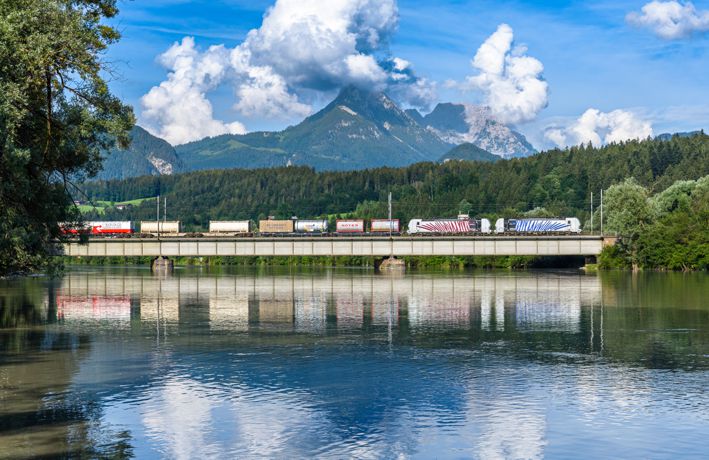
Kombiverkehr KG transported 665,981 containers, swap bodies and semi-trailers by eco-friendly rail in the 2025 financial year, posting sales of EUR 398.4 million.
Photo credit: Lokomotion GmbH (photographer Bálint Paha)
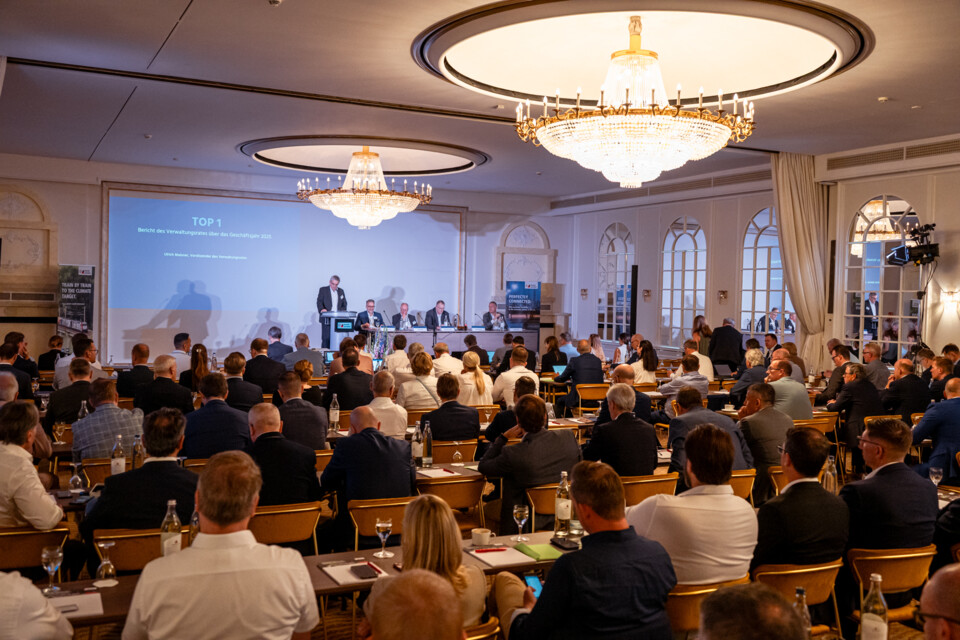
Kombiverkehr KG shareholders’ meeting in Berlin: the Board of Directors and the management team brief the limited partners on the 2025 annual results and provide an insight into the company’s current and future projects.
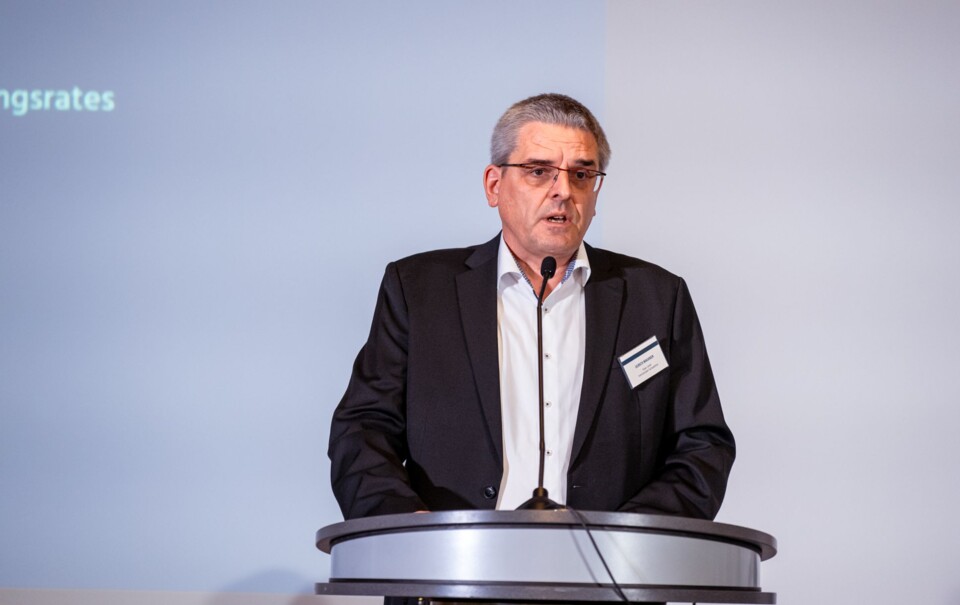
Ulrich Maixner, Chairman of the Board of Directors:“We can say today, with great satisfaction, that the transformation was the right decision and that we have succeeded in implementing it. It has brought about lasting change within the company.”
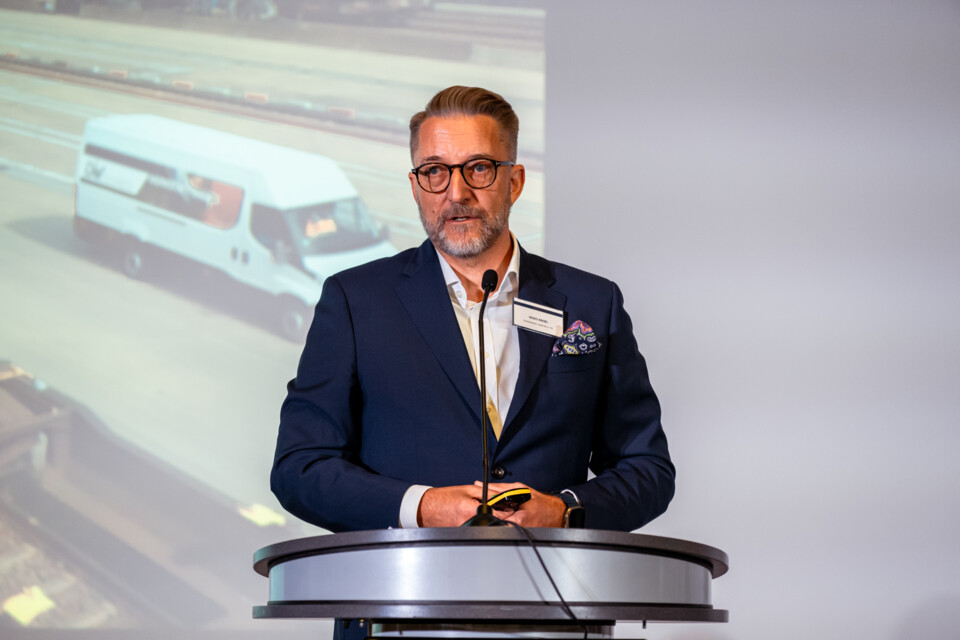
Heiko Krebs, Managing Director: “By investing in modern software architectures, digital customer services, data-driven connectivity and artificial intelligence, we are strengthening our company’s competitiveness and laying the foundations for efficient and sustainable transport processes in Combined Transport.”
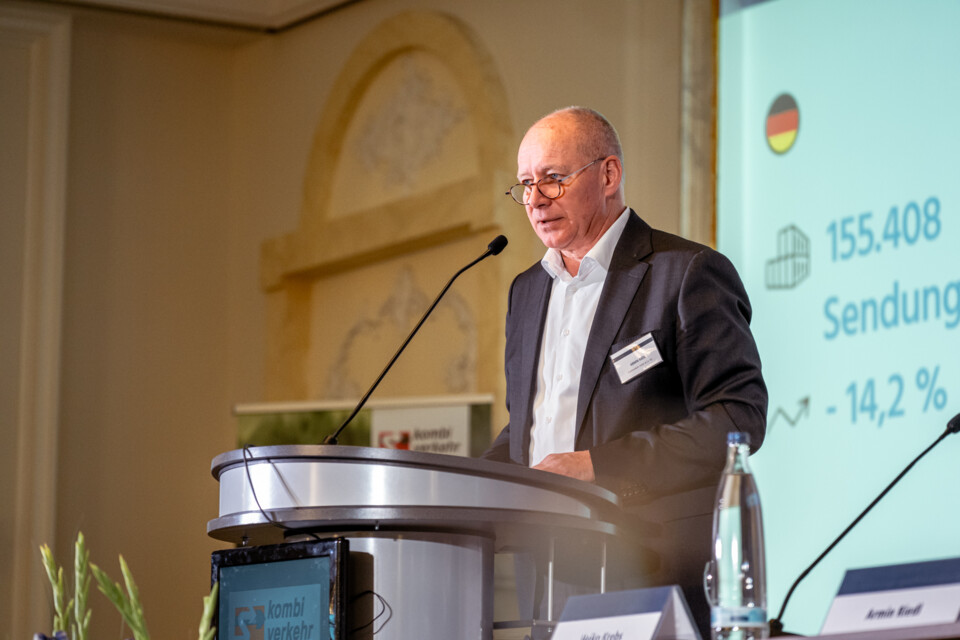
Armin Riedl, Managing Director: “While politicians listen to one or two working groups, we do not get the impression that the problem is being taken very seriously at the very top of the ministry.”
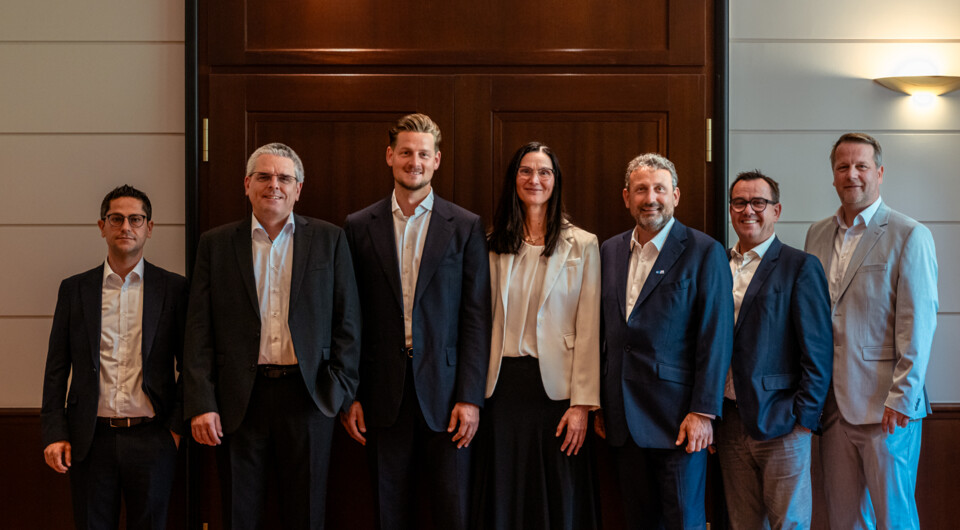
The newly elected Board of Directors of Kombiverkehr KG (freight forwarding side), from left to right: Ali Taskan (Lanfer Transport GmbH), Ulrich Maixner (Hoyer GmbH Internationale Fachspedition), Nils Buchmann (Paneuropa Transport GmbH), Sonja Stich (Karl Schmidt Spedition GmbH & Co. KG), Georg Dettendorfer (Johann Dettendorfer Spedition Ferntrans GmbH & Co. KG), Ueli Maurer (Bertschi AG) and Stev Etzrodt (Spedition Bode GmbH & Co. KG).
2025 key figures of Kombiverkehr KG at a glance:
Total truck consignments transported: 665,981
International truck consignments: 510,573
National truck consignments: 155,408
Total consignment volume in TEU (Twenty-Foot-Equivalent Unit): 1.33 million
Savings in carbon dioxide emissions in tonnes compared with end-to-end road transport: 1.0 million
Transport volume in gross tonnes: 15.77 million
Average transport distance: 847 km
Goods volume in tonne-kilometres (tkm): 13.35 billion
Sales in EUR: 398.4 million
Employees (FTE): 131
The 2025 annual report offers a comprehensive presentation of the business results of Kombiverkehr KG. It can be found at www.geschaeftsbericht2025.kombiverkehr.de.